A Practical Guide to Metal Powder Coating for Lasting Results
After years of working with metal finishing, I have come to appreciate how much the right coating process can make or break a project. I have seen beautifully fabricated parts rust within months because someone skipped the prep work, and I have watched budget-friendly jobs outlast expensive paint jobs simply because the shop knew how to apply metal powder coating the right way. If you are restoring an old car, building industrial equipment, or just want your patio furniture to survive another Houston summer, understanding how this process works will save you time, money, and frustration.
What Metal Powder Coating Actually Is
Metal powder coating is a finishing method where dry, finely ground particles of pigment and resin are electrostatically charged and sprayed onto a metal surface. Unlike liquid paint, which relies on solvents to keep the pigment suspended, this process uses an electrostatic charge to attract the powder to the grounded metal part. The part then goes into a curing oven, where the powder melts, flows out, and chemically bonds into a hard, continuous film.
The result is a finish that is significantly tougher than most wet paints. I have tested parts side by side, and the difference in durability and corrosion resistance is obvious. The coating does not chip as easily, it resists chemicals better, and it holds up to abrasion in ways that liquid paint cannot match. For anyone in the Houston Bay Area, where humidity and salt air can eat through a poor finish fast, that kind of protection matters.
Why Surface Preparation Decides Everything
I cannot stress this enough: the quality of your final finish starts with how well you prepare the metal. No coating, no matter how expensive or advanced, will stick to grease, rust, or old paint. This is where sandblasting comes into play. Sandblasting uses compressed air to blast abrasive media at the surface, stripping away contaminants and creating a profile that the powder can grip onto.
For automotive parts, especially those with complex shapes or hidden corners, sandblasting is the only reliable way to get every crevice clean. I have seen people try to skip this step and go straight to the powder coat gun, and the result is always the same: peeling, bubbling, or adhesion failure within weeks. For residential metal items like wrought iron railings or aluminum furniture, a thorough sandblast followed by a phosphate wash gives the powder a fighting chance.
Industrial equipment is another story entirely. Large machinery often has heavy grease, embedded dirt, and decades of layered paint. A good sandblasting setup can handle that, but it takes time and the right abrasive. In Pearland, shops that specialize in this kind of work know that surface preparation is not a step you rush.
Choosing the Right Powder for the Job
Not all powders are the same. The two main categories you will encounter are polyester powder and epoxy powder. Polyester powders are the workhorses of the industry. They offer good durability, excellent color matching, and decent UV resistance for outdoor use. Most automotive restoration projects use a polyester-based powder because it flows well and produces a smooth, even finish that matches factory colors closely.
Epoxy powder is tougher and more chemical resistant, but it breaks down faster in direct sunlight. I use epoxy for parts that live indoors or in protected areas, like engine components or industrial tool handles. For outdoor residential metal, such as a gate or a mailbox, a UV-resistant coating is the better choice. Some manufacturers now offer hybrid powders that combine the best of both, but they cost more and require precise curing conditions.
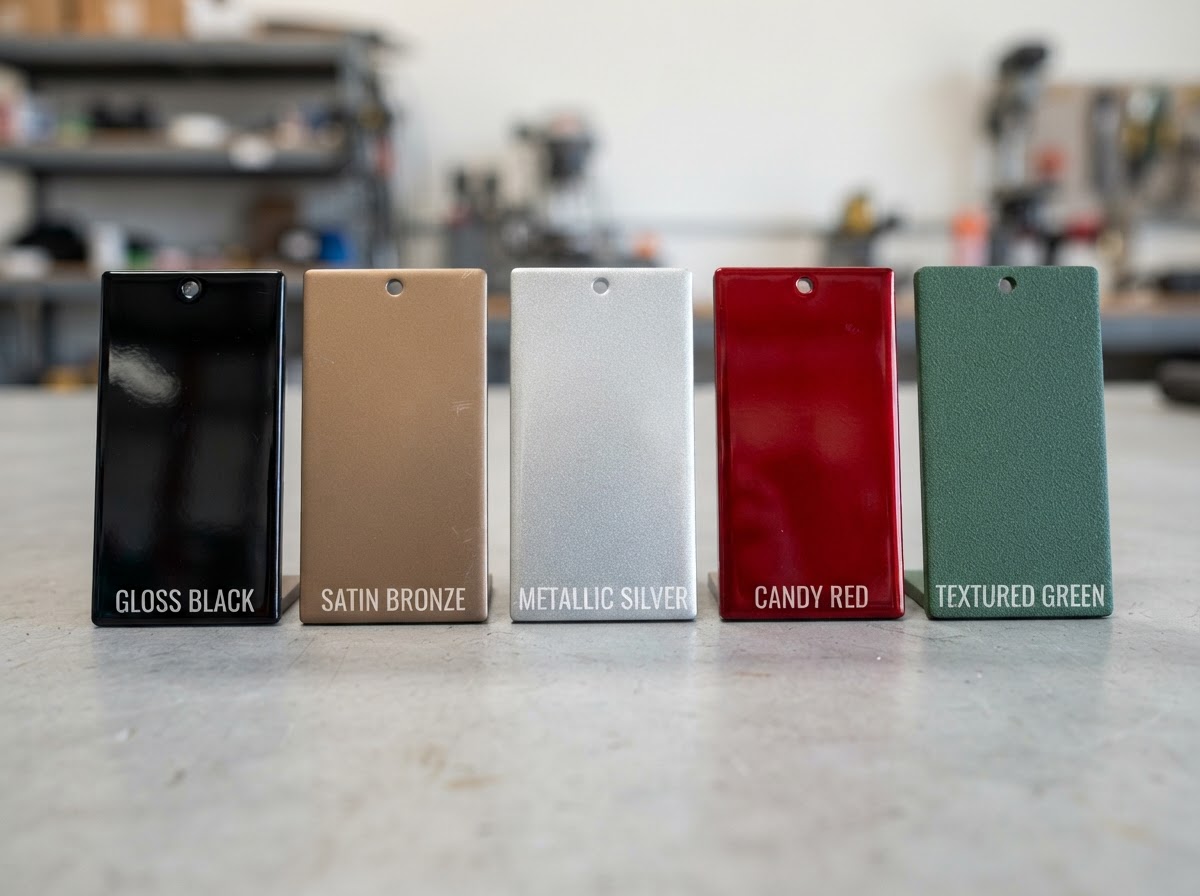
Color matching is another area where experience matters. If you are trying to match a faded 1970s car color or a specific shade for a custom fabrication, you need a shop that can mix powders and test spray-outs. Most good shops have a library of standard colors, but for exact matches, they rely on spectrometer readings and trial runs. I have learned to always ask for a sample panel before committing to a full batch.
The Electrostatic Spray Process
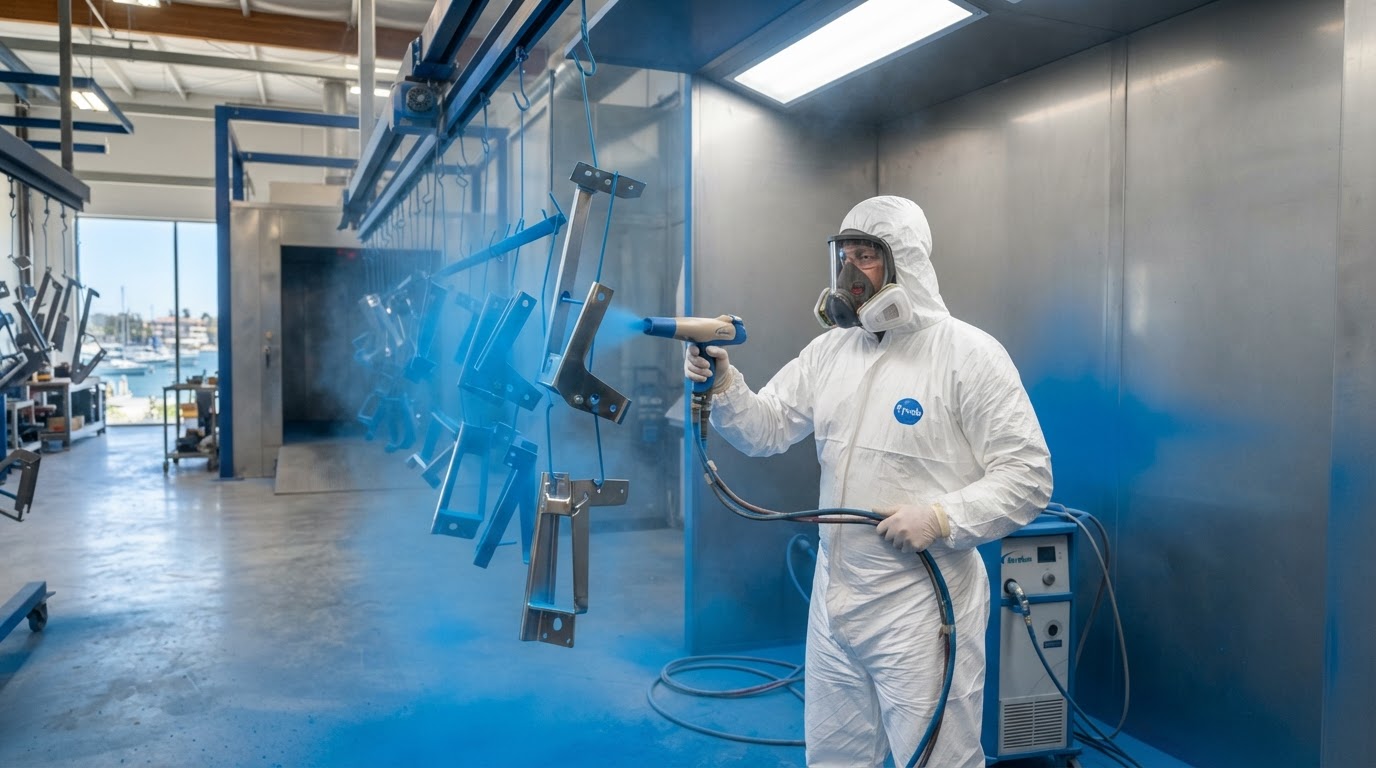
The electrostatic spray method is what gives metal powder coating its even coverage and low waste. When the powder leaves the gun, the powder coat gun imparts a negative charge to the particles. The grounded metal part attracts them, so the powder wraps around edges and into recesses more evenly than liquid paint ever could. This Faraday cage effect means you get consistent coating thickness even on complex geometries.
That said, there are limits. Deep blind holes or sharp internal corners may still get less powder than flat surfaces. Skilled operators learn to adjust their gun angle, air pressure, and voltage to compensate. I have seen guys who can coat a bicycle frame with almost no overspray, just by feel. It takes practice, but the results are worth it.
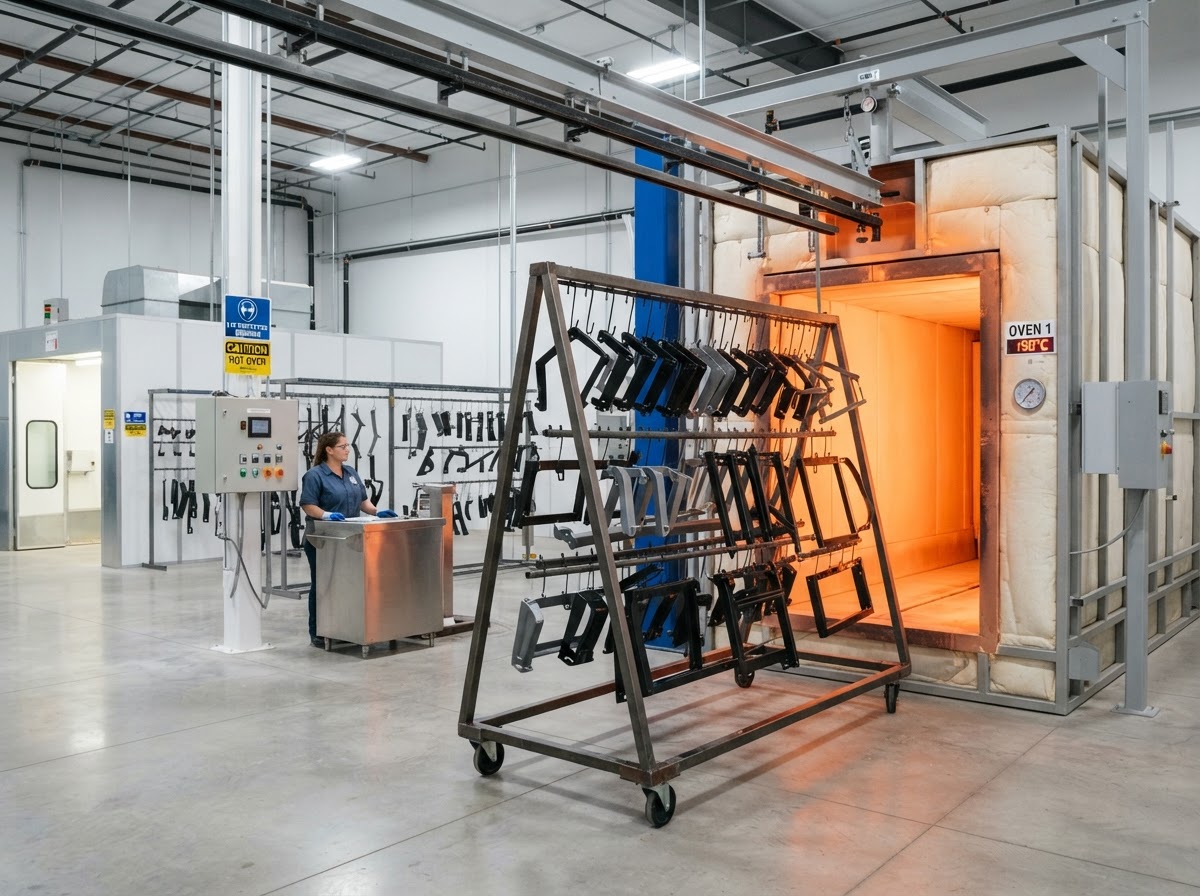
After spraying, the part goes into the curing oven. The oven temperature and time vary by powder type, but typically range from 350 to 425 degrees Fahrenheit for 10 to 20 minutes. The curing oven must hold a steady temperature across the entire chamber; cold spots cause incomplete flow and weak spots in the film. Good shops monitor oven profiles regularly. If you ever see a finish that looks orange-peeled or has pinholes, chances are the oven was not dialed in.
Where Metal Powder Coating Shines
In my experience, the best applications for this finish are items that face regular abuse or exposure. Automotive parts like engine blocks, brake calipers, suspension components, and chassis frames benefit enormously from the toughness of powder. I have coated truck beds and trailer hitches that still look good after years of hauling heavy loads in the Texas sun.
Industrial equipment is another obvious fit. Conveyor parts, machine guards, and storage racks take constant impacts and chemical spills. A thick, well-cured powder coat holds up far better than paint. For residential metal items like mailboxes, light fixtures, or outdoor furniture, powder offers a low-maintenance finish that does not yellow or chalk as fast as many liquid paints.
But there are cases where I would not recommend metal powder coating. Thin sheet metal that cannot handle oven temperatures is a no-go. Parts with tight tolerances where coating thickness could affect fit, like threads or bearing surfaces, need masking or alternative finishes. And if you need a high-gloss, mirror-like automotive finish, powder can get close but not always match the depth of a multi-stage liquid paint system.
Maintenance and Longevity
One of the reasons I keep coming back to powder is how little maintenance it requires. A properly applied coating resists chipping and fading for years. For outdoor items, a simple wash with mild soap and water every few months is enough to keep it looking fresh. Avoid harsh solvents or abrasive pads, as they can dull the surface over time.
If the coating does get damaged, touch-up is tricky. Powder is a thermoset material, meaning it cures permanently. You cannot just brush on a repair. For small scratches, some shops offer liquid touch-up paints that match the color, but the durability will not match the original. For larger areas, the best fix is usually to strip the part and re-coat it.
In the Houston Bay Area, where summer heat and humidity are relentless, choosing a UV-resistant coating for anything that will see direct sunlight is not optional. I have seen beautiful dark blue powder coats turn chalky and dull in just two summers because they were not formulated for UV exposure. Always ask your shop about the UV rating of the powder they plan to use.
Finding a Reliable Shop
If you are in Pearland or the surrounding area, you have options, but not all powder coating shops are equal. Look for one that does sandblasting in-house, because that tells you they understand the importance of surface preparation. Ask about the types of powders they stock and whether they can match custom colors. A good shop will let you watch a sample being sprayed and cured before you commit a whole batch.
Also ask about turnaround times. Automotive restoration often requires fast turnaround to keep a project on schedule. Industrial jobs may need to be done in stages to minimize downtime. A shop that communicates clearly about scheduling and pricing is worth more than one that offers the lowest price but cannot deliver on time.
I always tell people: do not judge a shop by the fanciest part in their showroom. Judge them by the consistency of their work on everyday parts. A shop that produces uniform, defect-free coating on a pile of small brackets is likely to do great work on your expensive car part or your custom metal fabrication.
Metal powder coating is not magic, but it is one of the most reliable ways to protect and enhance metal parts. When the prep is thorough, the powder is chosen wisely, and the cure is handled correctly, the result is a finish that saves you money and hassle over the long run. Whether you are working on automotive parts, industrial equipment, or residential metal, taking the time to understand the process will help you get the best possible result.